

Quality Over Category: One Whiskey-Maker’s Pursuit of Flawless Flavor
A Manifesto in Craft, Conviction, and the Freedom to Innovate
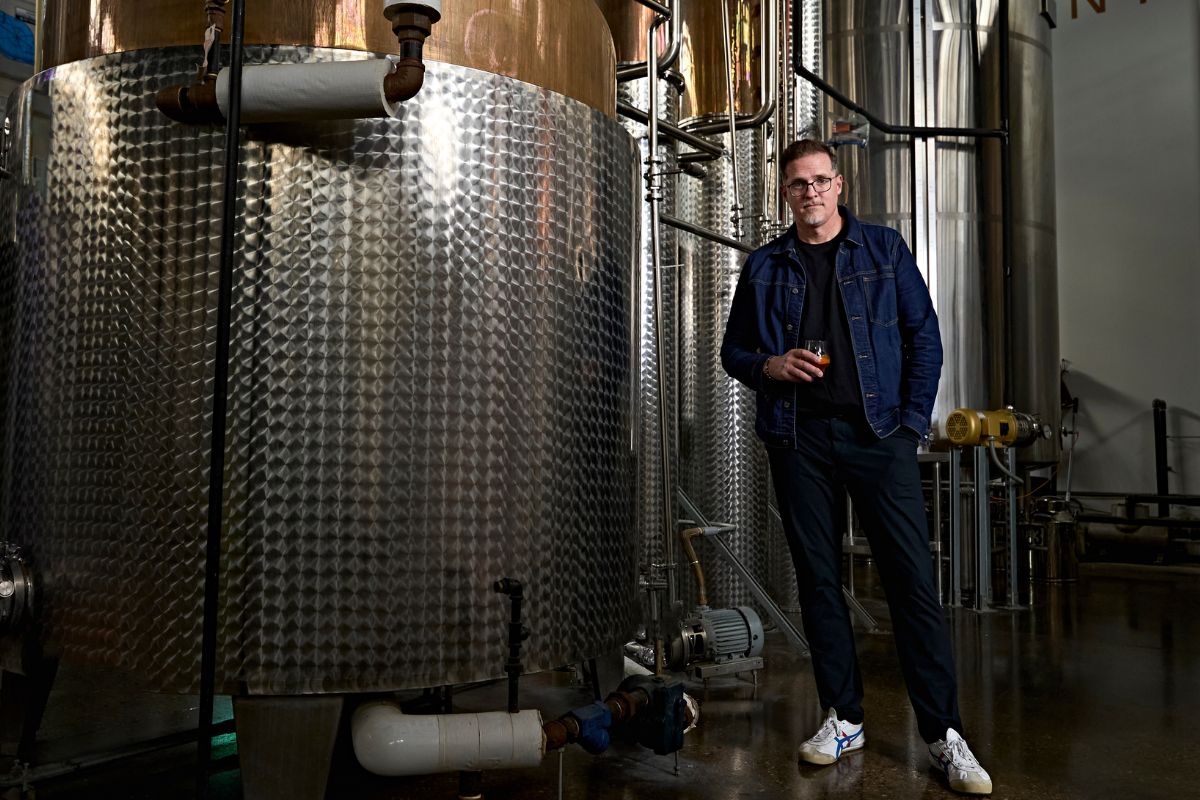
I didn’t come from a distilling family. I never worked for a distillery until I started one. I didn’t have a career on Wall Street or in engineering. I am an outsider to this industry.
But then, I’ve never really liked being inside anything too confining.
It comes from growing up on the prairies of southwestern Minnesota. With no trees or mountains to block the view, I explored freely and filled those prairies with landscapes and creatures of my imagination. Even the square grid of county roads were too confining for me, so I explored the hidden worlds around the river that flows where it wants and will be there when the roads are gone.
But being inside versus outside wasn’t really the issue.
I have a relative who was a monk and I’ve been around monasteries my whole life. It’s hard to think of a more confined life than a cloister. But that’s just the surface view. The people I’ve known there have had the some of the freest spirits I’ve ever seen; free enough to leave everything “normal” and “conventional” behind to explore worlds within themselves and deepen their relationships to others across time from inside a tradition much greater and older than themselves.
The key question is: inside or outside, is there freedom and direction to pursue what really matters? Or is it just fitting in with “how things are done,” or wandering aimlessly around?
A Sense of Place
When the desire—so strong I would name it a “calling”—to make a new American whiskey took hold of me, I was working for monks making digital copies of medieval manuscripts in the Middle East and Ukraine, to safeguard them against the risks of war. My wife and I were on a short vacation in Kentucky. Both of us were whiskey lovers and wanted to learn how bourbon was made.
As we walked through the tour, I kept thinking about the name given to whiskey by the Irish monks who invented it: aqua vitae—the “water of life.”
I imagined water curving around the land, flowing free and following no law except gravity, bringing new life everywhere it touched.
I imagined the Mississippi River emerging from a limestone lake in northern Minnesota to begin its 2,500-mile journey down the heart of America. Moving silently past fir stands and black spruce boglands in the northern forest. Winding around hills of brazen oaks in the central and eastern woodlands. Coursing between the shoulders of bluffs that border the farmlands of the southern and western prairies. All before leaving Minnesota.
And I imagined a river of tradition beginning with a small trickle from the first whiskey still, flowing from Ireland to Scotland and, centuries later, to America.
There’s just something about whiskey that’s different from everything else. The swell of pleasure it excites in all of the senses. The portals it opens, connecting us to the long histories of land and peoples. And the pursuit of perfection it offers to the people who practice its craft.
A desire took hold of me: to form a new river of whiskey tradition in Minnesota that expresses the character of the North Country.
To break new ground in the pursuit of flawless flavor.
Maybe it was the manuscript work, which took me to 1,700-year-old churches where people still pray and put me in the room with books written 1,000 years ago that still bear the quill strokes of their authors, but I didn’t want to just add another ephemeral new brand to the overcrowded whiskey shelves. I dreamed of founding a whiskey lineage to survive the uncertain centuries.
To do that, I couldn’t copy what the Kentucky bourbon masters were doing or transplant their methods to my home state.
I had to imagine something new—and master it.
While sipping a neat pour overlooking a valley at the end of the tour, I had a vision for how it could be done.
Not the way I had just learned bourbon was made: raw, harsh distillations of sweet, simple corn-based mash, mellowed and complexified for several years in a new, charred, American white oak barrel. That ingenious method was already perfected. All the “new” hoeing in that row was additive, not innovative or transformative—more grains in the mash bills, more time in the barrel, more barrels, more, more, more.
I’d go to the wider country that opened out in the opposite direction. One grain—malted barley—painstakingly fermented and precisely distilled for complete, complex, polished flavor right off the still, intentionally shaped to harmonize with the specific character of the white oak itself.
That’s the vision I took home to Minnesota, more intoxicating than the whiskey I had in my hand.
A Nod to Tradition
It needed to be. To repurpose Dostoevsky’s line about farming: starting a whiskey distillery in reality is a harsh and dreadful thing compared to doing so in dreams. It wrings so much more out of you than you can imagine. And there is never a time when you can really lay it down. Only commitment to something bigger and deeper than yourself keeps you going.
I couldn’t start right away. My family needed me to earn a reasonably secure labor hour. So, I went to law school and into practice. But in the early morning and late night hours, I researched, studied, and sipped whiskey craft.
I discovered that the vision I had for a new American whiskey—malted barley, distilled pristinely, all in one place—flowed from the oldest whiskey traditions.
Irish monks were the first to make whiskey, bringing the art to Scottish shores. They performed every step themselves: mashing, fermentation, distillation, and storage. They used simple pot stills made of copper to separate the vapors and made their cuts based on human aesthetic judgment. Every part of the process was open to nature and the environment. For centuries, this was how whiskey was made, even after the craft moved beyond the monasteries.
Industrialization changed this. Huge, multistory refineries replaced artisanal workshops. Brewing was outsourced to others instead of performed in-house. Continuous column stills made vapor separations and automatic cuts and collections through mechanical and chemical settings. Expensive, nutritionally dense, low-sugar, low-yield malted barley was replaced by cheaper, nutritionally light, high-sugar, high-yield corn.
But what traditional craft distillers lacked in environmental control and sophisticated equipment, they made up for with creative freedom and control over taste and vision. These simplest, oldest type of distilleries made the most complex, elegant, varied, and valuable whiskeys in the world, with the most individualized expressions and strongest connection to the land.
Ireland in the 1980s and then Scotland in 2009 finally codified these centuries-old whiskey traditions under “single malt” regulatory standards to preserve their unique identities and protect their diverse expressions from the mass-produced sameness and placelessness of industrialized distilling.
Like these Irish and Scottish single malt distillers, at Brother Justus Whiskey Company, we use 100% malted barley; perform all steps ourselves; distill in batches on a pot still; collect our distillate at below neutral spirit (190-proof) to preserve the character of the grain; and age it in oak.
A Creative License
My intent wasn’t to make single malt Scotch or Irish whiskeys in America, though; it was to make whiskey that married single malt quality and integrity with unmistakably American identity. So, our approach differs from the Scottish and Irish single malt standard in three ways, each intended to express our Americanness.
First, we make it in America.
Second, we age in new, charred American white oak barrels, because that is America’s revolutionary contribution to world whiskey craft.
Third, the pot still we use has a column attached to it. Pot-column hybrid stills are the calling card of American craft spirits. You’ll find one in any small, independent craft distillery in your community or across the country.
Attaching a column to a pot still doesn’t industrialize whiskey craft. Whiskey distilled in a pot still with column is still: distilled in batches; dependent on the strange geometries of vapor and copper; vulnerable to the vagaries of environment; operable only by a human, not a computer; and cut by taste, smell, and other sensory indicators, not automatic preprogramming. Attaching a column simply adds versatility, precision, and efficiency to stubbornly inefficient, traditional, artisanal pot still distillation. And, although Irish and Scottish Single Malt regulations don’t specifically allow pot stills to have columns, they don’t specifically prohibit it either.
As an outsider, I knew I had generations of mastery and learning to make up for. But that was an advantage. It allowed me to approach everything with a beginner’s mindset. No preconceptions of how things are done. No short cuts either. No free rides on the backs of anyone else’s knowledge or mastery. Start at the bottom, from the beginning. Begin with the ingredients. Apply technique. Learn. Repeat. Work your way up. Just work.
I was blessed to find the perfect creative partner, James R. Jefferson, who is now our master blender. James had the brewing knowledge, palate, and patience to develop a beer containing the flavors and textures I had in mind for this new whiskey. He didn’t come from the distilling industry, either. So, when I told him we needed to taste through every few minutes of heads and tails of the distillate to find where the delicious ones were hiding, he didn’t flinch; he set up the samples.
It took several years, several hundred fermentations, a thousand distillations, and a thousand 5-gallon test barrels, but we finally found our way to new flavor country.
An Appreciation for Transparency
Before we could sell our first bottle in 2018, I had to find a classification for it under US regulations.
The options were: “Whiskey” or “Malt Whiskey.”
“Whiskey” lets the distiller use any grain, source their mash or ferment it themselves, distill in any kind of still at any proof below neutral spirit, and age in new or used white oak barrels.
“Malt Whiskey” requires the distiller to use at least 50% malted barley, to age in new charred white oak barrels, and to cut the distillate so it’s collected at no higher than 160-proof.
At first glance, “Malt Whiskey” seemed like a good fit, with its malted barley and new oak component. But surface compatibility concealed a razor blade: government interference with our freedom to control the character of the distillate we collect—a guillotine lopping off our choices as soon as the proof hits 160.
On the other hand, the open space of “Whiskey” let me self-impose traditional single malt disciplines without sacrificing control over distillate proof and flavor.
So, we decided to put “Whiskey” on one line of our label and “American Single Malt” on top of it.
It was direct, transparent, and true. We made “Whiskey” in an “American Single Malt” style. Plain and simple.
Our regulator the Alcohol and Tobacco Tax and Trade Bureau (TTB) agreed with our approach and approved our label. We went to market and people loved it. Global accolades for both product quality and innovative methods. The San Francisco World Spirits Competition awarded it 98 points. Whiskey supertaster Fred Minnick selected it as the #4 Best American Whiskey—and his personal favorite of 2025.
An Unnecessary Regulation
Then, twelve years after we started and seven years after we sold our first bottle, the TTB changed the rules.
As of January 30, 2025, “American Single Malt Whiskey” has a formal regulation that turns the meaning of “single malt” inside out and upside down. From now on, to call a product “American Single Malt Whiskey,” you can source your beer from someone else and distill on a multistory, continuous column still controlled by a computer. But you can’t control the character of your own distillate. You have to stop cutting and start collecting when it hits 160-proof.
In other words, “American Single Malt Whiskey” now officially and legally means the opposite of what “single malt” has historically and traditionally meant and what it means to everyone everywhere else.
I think most consumers would be shocked by that.
Most shocking to me is that the government didn’t impose regulation on its own. Some distillers in the industry actually asked them to do it.
I don’t understand wanting the ability to sell an industrial spirit under an “American Single Malt Whiskey” label.
I don’t understand wanting to give any government any control over distillate character, or to have less freedom to shape distillate flavor than the world’s other single malt distillers.
And I don’t understand the desire to create through regulation and to be regulated in what we create.
I never pushed for “American Single Malt Whiskey” regulation or to use government power to enforce my way of doing things on others. American Single Malt Whiskey is new, barely 20 years old with only a handful of distillers doing it full-time. I say, let everyone find their own way for a while. See if we all converge somewhere common, before we fence everyone in behind a federally enforceable rule.
I want my team and I to be left alone in Minnesota to pursue our vision for American Single Malt Whiskey perfection, marrying the oldest single malt traditions with fresh American innovation. I want to create pleasure and portals of connection for others and leave it up to consumers, not me or the government, to decide with their choices whether our whiskey earns its name and deserves to endure. If they decide it doesn’t, then we’ll adapt. If they decide it does, then why should we have to?
Then again, as I have been told many times by now by various insiders, and as I must admit, I am an “outlier.” My views, apparently, don’t conform to the mainstream.
But I wonder.
A Relentless Commitment to Our Mission
I’ve petitioned the TTB to amend the “American Single Malt Whiskey” standard of identity to expand the distillation proof limit from no greater than 160-proof to the traditional and international single malt norm of less than neutral spirit, i.e., 190-proof.
In an ideal world, we’d also eliminate oxymoronic industrial “single malt” production from sourced beer and continuous column refineries. But some distillers could argue that they relied on the new regulation to do these things and would be hurt if they no longer could.
No one would be hurt by more freedom though.
Distillers wanting to distill under 160-proof could do so. Or they could see what new things they could create beyond it. Either way, they wouldn’t be inside or outside a regulatory fence. They would be making their own creative choice.
Craft distillers would benefit. We tend to be more fearless experimenters and freer innovators. And our pot-column hybrid stills are unique tools for making precise, flavorful cuts that would be hard, but not impossible, for industrial bourbon distillers to replicate on their big continuous column stills, and for industrial Scotch distillers to replicate on their pot-only set-ups. If so inclined, I encourage my craft colleagues to send a simple, respectful petition of their own to the TTB. After all, the TTB didn’t insist on regulating “American Single Malt Whiskey.” It was asked to, so we can ask them to make it better.
Amending the “American Single Malt Whiskey” standard to allow distillers to make their cuts and collect their distillate where they want, as long as it is less than neutral spirit, won’t make “American Single Malt Whiskey” mean what “single malt” has always meant. But it will, at least, mean freedom.
Until then, we’ll put our whiskey out under a label that, although not trendy, is honest and true:
American Whiskey
100% Malted Barley. Made From Minnesota.
Mashed, Distilled, and Bottled by Brother Justus.
In this spirit, we are retiring our current brand identity and introducing a new one—one that has been waiting for this moment.
Our namesake Brother Justus Trettel was a Benedictine blacksmith monk from Minnesota, who helped his neighbors through two Depressions by equipping them with whiskey stills and teaching them the highest standards of craft. In doing so, he honored their dignity and freedom by giving them the creative means to support themselves. He defied Prohibition, but it wasn’t blind rebellion. It was obedience to a higher law.
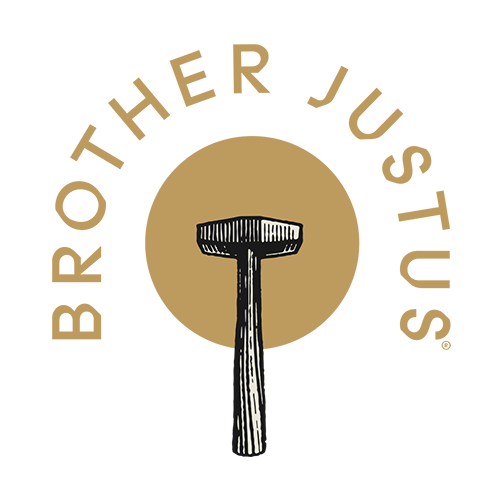
The hammer in front of the sun disc on our new label represents the light he cast in dark times on his neighbors’ path, through the clarity of his vision, the discipline of his craft, and the strength of his labor.
It symbolizes the light we all shine when we stand in pursuit of a good that is greater than ourselves—even when we appear to stand alone.
Quality over category isn’t a slogan. It’s our rule.
Cheers,
Phil Steger
Founder and CEO
Brother Justus Whiskey Company
Minneapolis, Minnesota, USA